

Protect your order from damage, loss, or theft during shipping.
It has nothing to do with screen time, sugar, or bedtime routines. It's about how their nervous system processes the world — and most parents never get told this.
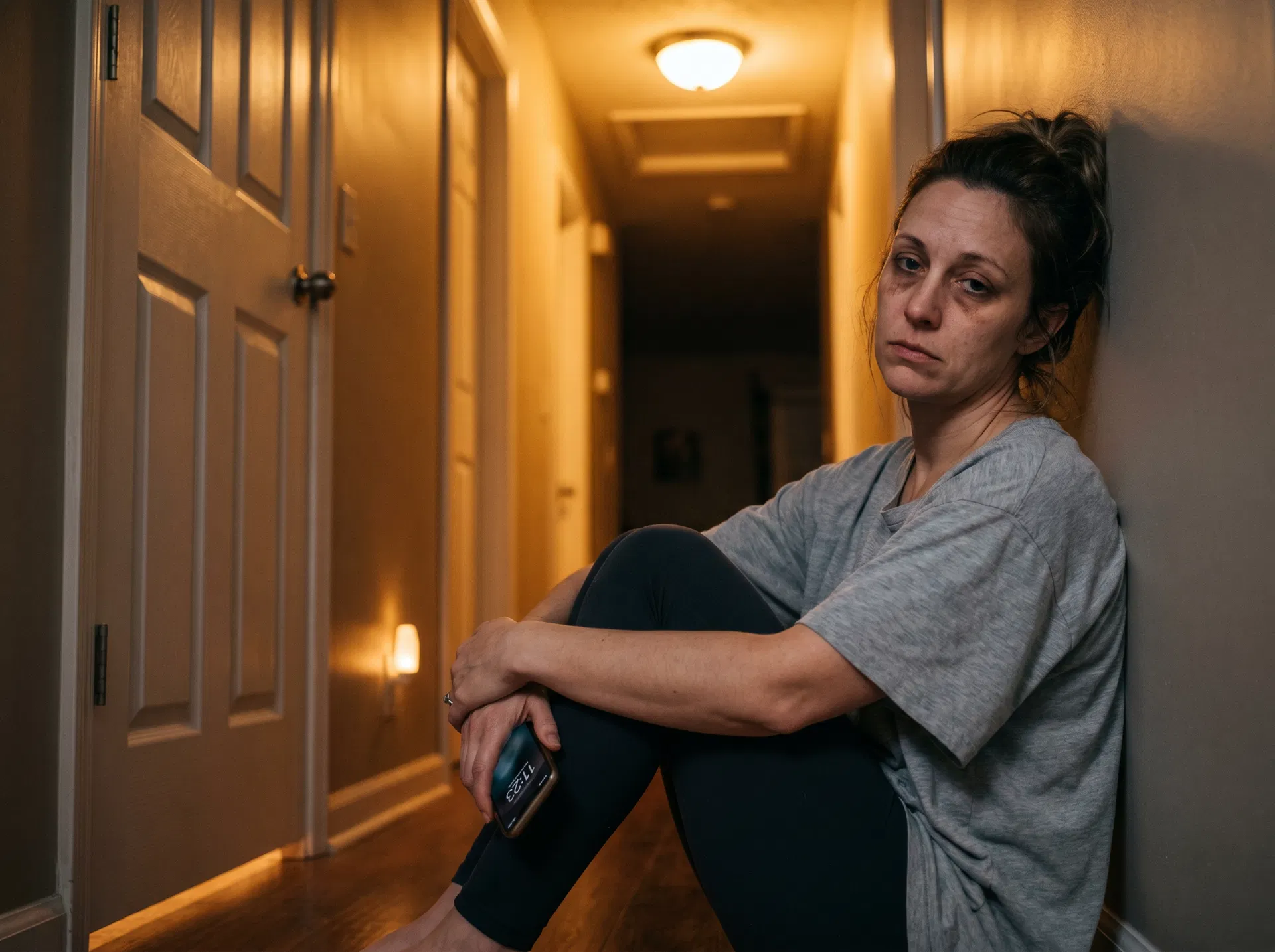
Night 847 of sitting outside his door. If you know, you know.
I've been working with ADHD and sensory kids for fourteen years. And in that time, the question I get asked more than any other — from exhausted, desperate parents sitting across from me in my clinic — is always some version of the same thing:
"We've tried everything. Why won't he just sleep?"
The melatonin. The weighted blankets. The blackout curtains. The white noise machines. The elaborate bedtime routines that take 45 minutes and still don't work. The essential oils. The magnesium gummies.
I've heard it all. And I understand the exhaustion behind it — not just the child's, but the parent's.
What most parents don't know — and what I wish pediatricians would explain — is that for kids with ADHD, autism, or sensory processing differences, the problem isn't behavioral. It isn't a discipline issue. It isn't even really a sleep issue.
It's a nervous system regulation issue.
"Their nervous system doesn't know how to transition from 'on' to 'off.' It's not that they won't calm down. It's that their body doesn't have the input it needs to do it."
Here's what the research tells us, and what I explain to every parent I work with:
The human nervous system has two modes: sympathetic (fight-or-flight, activated, alert) and parasympathetic (rest, digest, calm). For neurotypical kids, the transition between these two states happens naturally as the day winds down. The body gets the message: it's time to rest.
For kids with ADHD and sensory processing differences, that transition is dysregulated. Their nervous system stays in a heightened state long after their body is physically tired. They're exhausted — but they can't land.
The clinical term is sensory modulation disorder. And the most effective non-pharmaceutical intervention we have for it — the one that's been in occupational therapy practice for decades — is deep pressure input.
Deep pressure input is exactly what it sounds like: firm, even, distributed pressure applied to the body. Think of how a hug calms a distressed child. Or how swaddling settles a newborn. The mechanism is the same — proprioceptive input signals to the nervous system that it is safe, contained, and can downregulate.
Weighted blankets provide pressure from above — but only while the child is still. The moment they roll over, kick, or move (which sensory kids do constantly), the blanket shifts, slides off, or bunches. The pressure becomes inconsistent. And inconsistent pressure is often more dysregulating than no pressure at all, because the nervous system keeps having to re-adjust.
I don't say this to dismiss the things you've already tried. Most of them are based on real science. The problem is that they're designed for neurotypical sleep — not for a nervous system that processes sensory input differently.
Melatonin helps with sleep onset but does nothing for the underlying dysregulation. The child falls asleep faster but still wakes at 2am, still can't settle back down, still ends up in your bed.
Weighted blankets, as I mentioned, are inconsistent by design. They're also hot. And for a sensory kid who already struggles with temperature regulation, adding heat to the equation often makes things worse, not better.
Bedtime routines matter — but they're a behavioral intervention for a physiological problem. You can do everything right and still have a child who can't cross the threshold into sleep because their body hasn't received the input it needs.
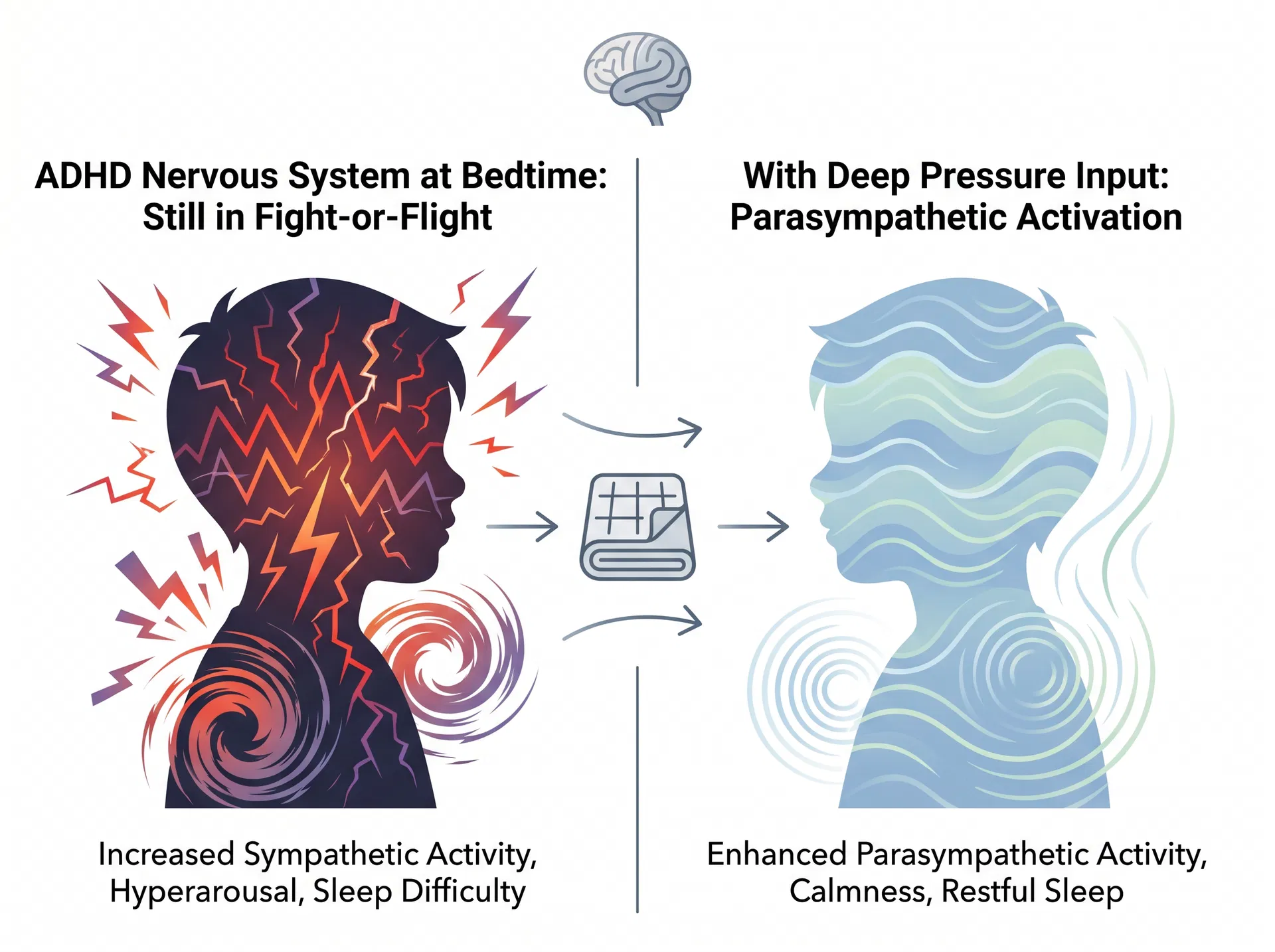
The nervous system science: why ADHD kids stay in fight-or-flight at bedtime — and what changes with deep pressure input.
About six years ago, I started recommending a specific type of sensory tool to the families I work with. It wasn't new — it had been used in clinical settings for years. But it had recently become available for home use, and the results I was seeing were consistent enough that I now recommend it as a first-line intervention before we even discuss medication.
It's called a sensory compression sheet.
Unlike a weighted blanket, a compression sheet attaches directly to the mattress. It stretches over the top and tucks underneath, creating a snug, even pocket of pressure that surrounds the child from all sides — and stays in place no matter how much they move.
The pressure is consistent. It doesn't slide off. It doesn't bunch. It doesn't overheat. And because it's anchored to the mattress, the child can move freely within it — which is critical for sensory kids who need proprioceptive input, not restraint.
"The first time I put one on my son's bed, he was asleep in 12 minutes. He'd been averaging 90 minutes to fall asleep for three years. I sat in the hallway and cried."
That's from a parent I worked with last year. Her son is 8, diagnosed with ADHD and sensory processing disorder. She'd tried everything — and I mean everything. The compression sheet was the first thing that worked consistently.
Here's what the research tells us about why:
The compression sheet I recommend most consistently to families is the Zelora CalmSheet™. It's made from ultra-soft milk silk fabric with 4-way elasticity, fits over the mattress like a fitted sheet, and provides gentle, consistent deep pressure input all night — anchored in place no matter how much your child moves.
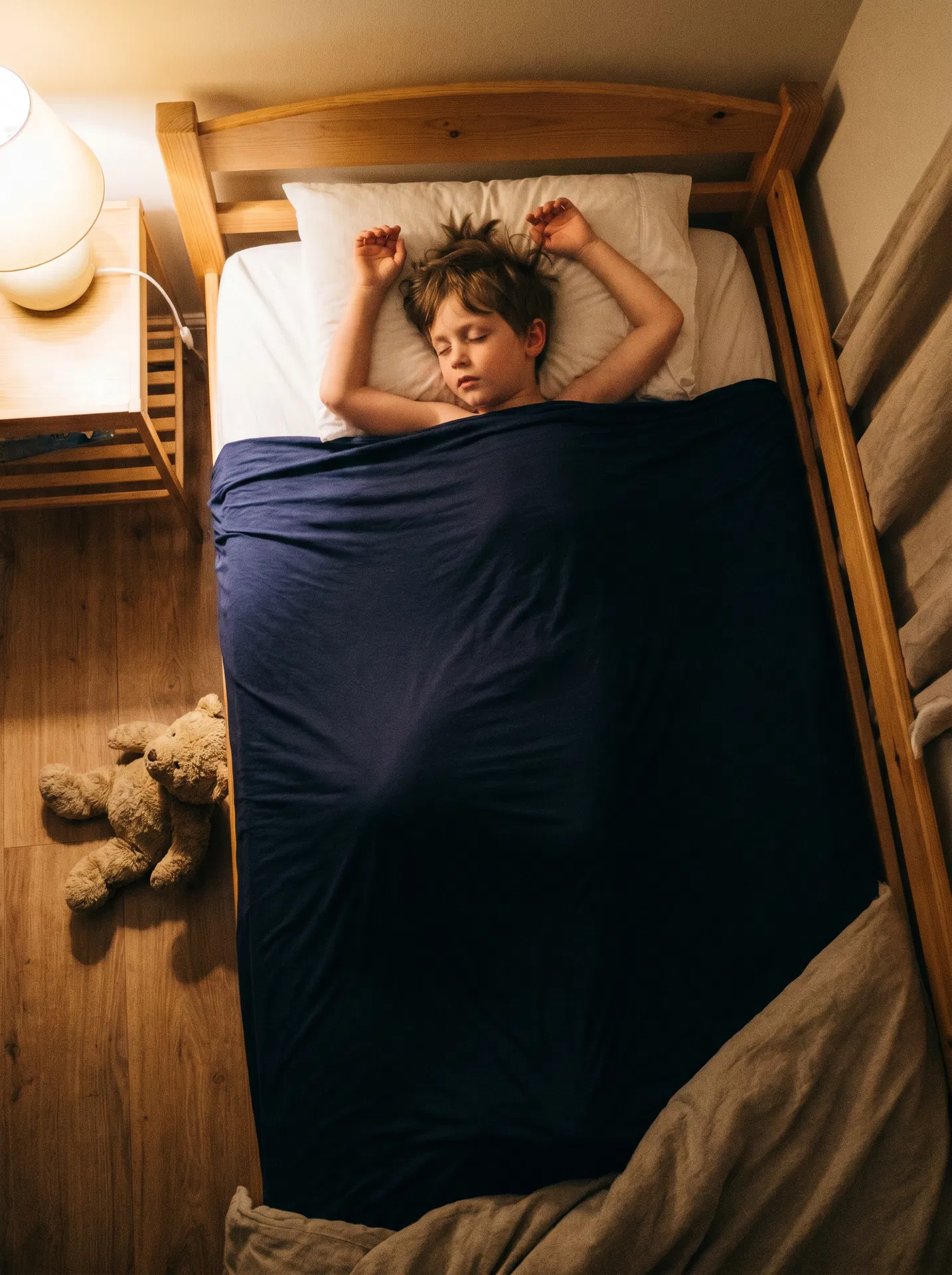
No pricing shown here. See full details on the product page.
These are real parents. Real kids. Real results.
"My son has ADHD and sensory processing disorder. He was averaging 90 minutes to fall asleep every single night. We tried melatonin, weighted blankets, white noise, everything. The CalmSheet was the first thing that worked. Night one he was asleep in 20 minutes. Night three it was 11 minutes. I genuinely cried."
✓ Verified Purchase"We'd been doing the bedtime routine for 2 hours every night for 4 years. Sitting outside his door, waiting. The CalmSheet cut it to 25 minutes in the first week. He stays in his bed now. He sleeps through the night. I don't know how to explain how much this has changed our family."
✓ Verified Purchase"Our daughter has autism and sensory issues. She was waking up 3-4 times a night, every night. Her OT mentioned compression sheets and we found this one. She's been sleeping through the night for 6 weeks straight. Her teacher has noticed a difference in her focus and mood at school. I tell every parent I know about this."
✓ Verified Purchase"My son is 9 and has been on melatonin for 3 years. It helped him fall asleep but he still woke up at 2am and couldn't get back down. Since the CalmSheet, he sleeps straight through. We're actually talking to his pediatrician about reducing the melatonin. I wish we'd found this years ago."
✓ Verified Purchase"I'm an OT and I recommend this to families all the time. The quality is excellent, the pressure is consistent, and it stays on the mattress no matter how much kids move. It's the most practical sensory sleep tool I've found for home use."
✓ Verified Purchase
The CalmSheet stretches over the mattress and tucks underneath, creating a continuous loop of gentle pressure. Unlike a weighted blanket that sits on top, the compression is anchored — it stays consistent whether your child is lying still, rolling over, or moving around. The nervous system receives the same regulatory input all night.
The ultra-soft milk silk fabric stretches in all four directions. Your child can move freely — kick, roll, shift positions — without losing the compression benefit. There's no resistance, no restriction, no discomfort. Just consistent, gentle pressure that follows their body.
One of the most common complaints I hear about weighted blankets is heat. The CalmSheet is designed to breathe. It doesn't trap heat. For sensory kids who already struggle with temperature regulation, this is often the difference between a tool they'll actually use and one that ends up in the closet.
The CalmSheet is designed for children with ADHD, sensory processing differences, autism, anxiety, or any child who struggles to settle at bedtime or stay asleep through the night. It's also used by children who simply sleep better with compression — some neurotypical kids love it too.
It is not a restraint. Your child can get in and out freely. It is not a medical device. It is a sensory tool — the same category of intervention that occupational therapists have been recommending for years, now available for home use.

30-Night Guarantee · Free Shipping · Therapist Approved
30-Night Guarantee · Free Shipping · Therapist & OT Approved
This article is written for informational purposes. The Zelora CalmSheet™ is a sensory tool, not a medical device. Consult your child's healthcare provider or occupational therapist for personalised guidance.